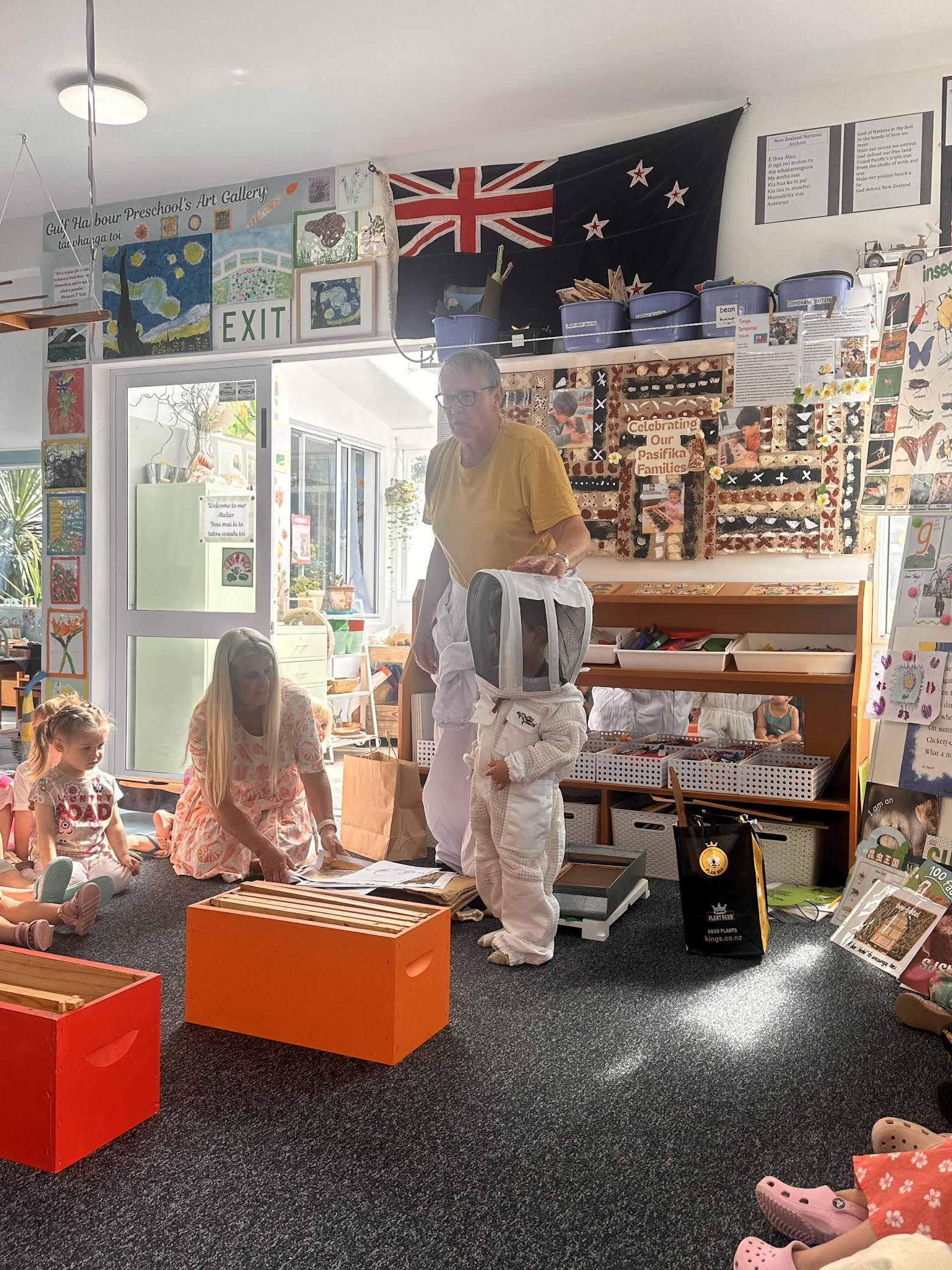

We were ‘buzzing’ with excitement as Zachary’s lovely Grandad came to visit us. Mervyn is a passionate beekeeper who cares for his own hives and has shared his love of bees with his grandchildren. Zachary proudly told us that his older brother already has his own beehive, and soon he will too!
Mervyn arrived dressed in white and explained that beekeepers wear light-coloured clothing and use gentle smoke to help calm the bees. The children listened carefully as he shared fascinating facts about the life of a honey bee. We discovered that bees have five eyes – two large compound eyes and three tiny eyelets on top of their heads. With the three little eyes, they are able to see the infrared light given off by the flowers! How clever are they?
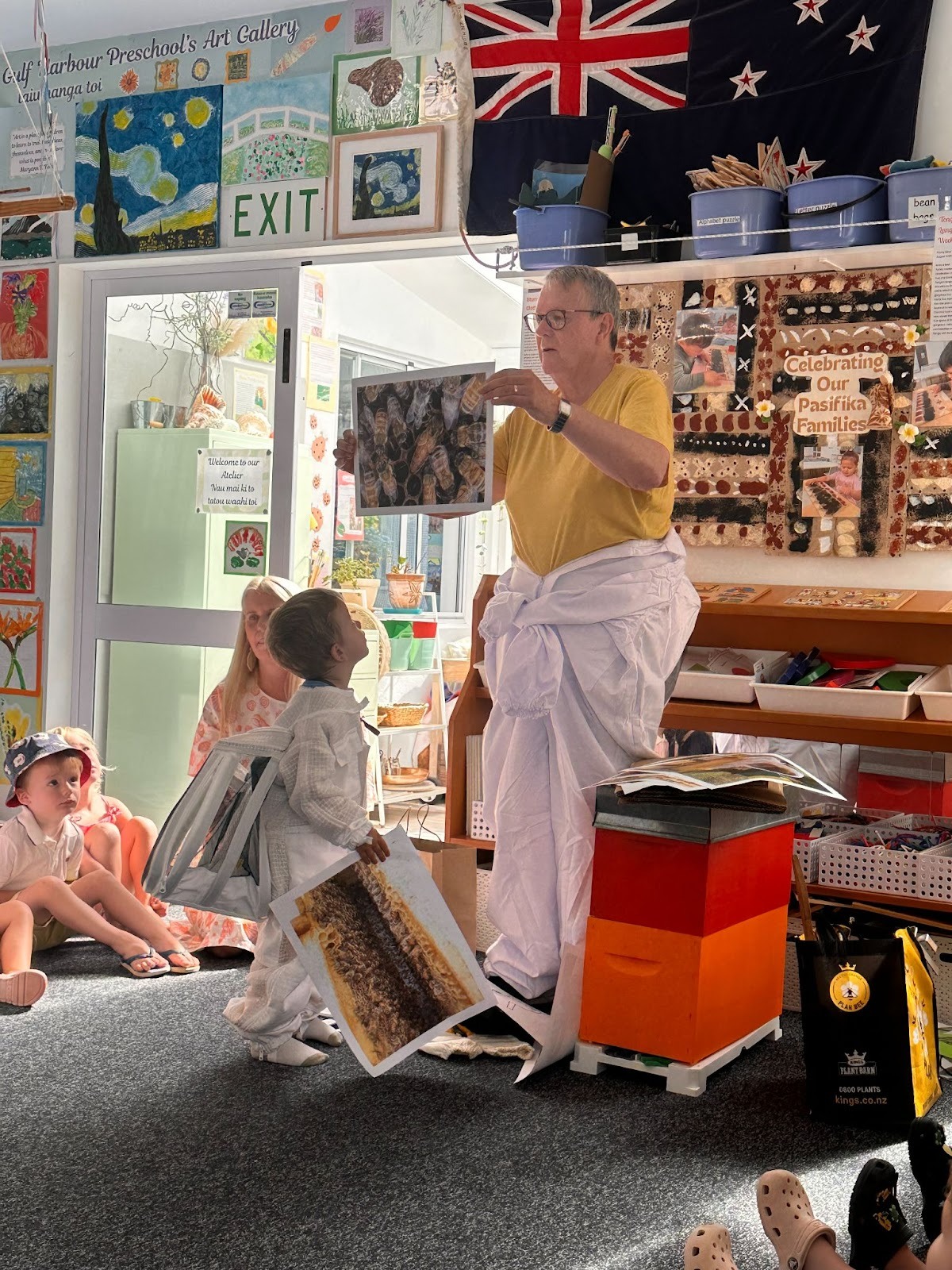
We learned that bees have very special jobs within the hive. The female worker bees take on many roles during their lifetime – starting as builders and nurses, then becoming guards, and finally foragers who fly out to collect nectar and pollen. The male bees (drones) have a different role, and the queen bee, who is much larger, lays all the eggs. The children were amazed to hear how organised and hardworking a hive community is.
Mervyn showed us how bees collect nectar using their long tongue, called a proboscis. The nectar travels into a special “honey stomach,” and later the bee regurgitates it into honeycomb cells to feed the larvae and to make honey. We explored why honeycomb is made from hexagons – the shape makes the cells strong and efficient, with all sides touching.
The children were especially interested to learn that bees recognise their own hive by its colour, and that when bees see the colour red, it appears black to them. We also talked about how bees were introduced to Aotearoa, New Zealand, to help pollinate flowers and produce honey. Mervyn brought some delicious honey made from local pōhutukawa flowers, and we all had a small taste — it was sweet, golden, and delicious!
We discovered that bees carry pollen in little “baskets” on their legs and that their lives are short and very busy. Mervyn explained sadly that a bee’s life often ends when its wings become worn out from flying. We even learned that tired bees resting on flowers can sometimes be gently revived with a small drop of honey, and that when bees land on water, they can flap their wings quickly to create lift and fly away.
We were so proud of all our children listening so carefully and concentratedly, and that includes our very new little ones too! Throughout the visit, our children asked thoughtful questions too, along with our teachers, and they showed genuine curiosity about these wonderful little creatures that we see in our gardens!.
This special visit deepened our understanding of the natural world and reminded us how important bees are in our coastal community and indeed for our world’s survival! Thank you, Mervyn, for inspiring curiosity and wonder in our young learners — it was truly a ‘sweet’ and wonderful learning experience! 🐝🍯
.png)
.png)