

My Squeegee Space
Masterpiece
September 2026
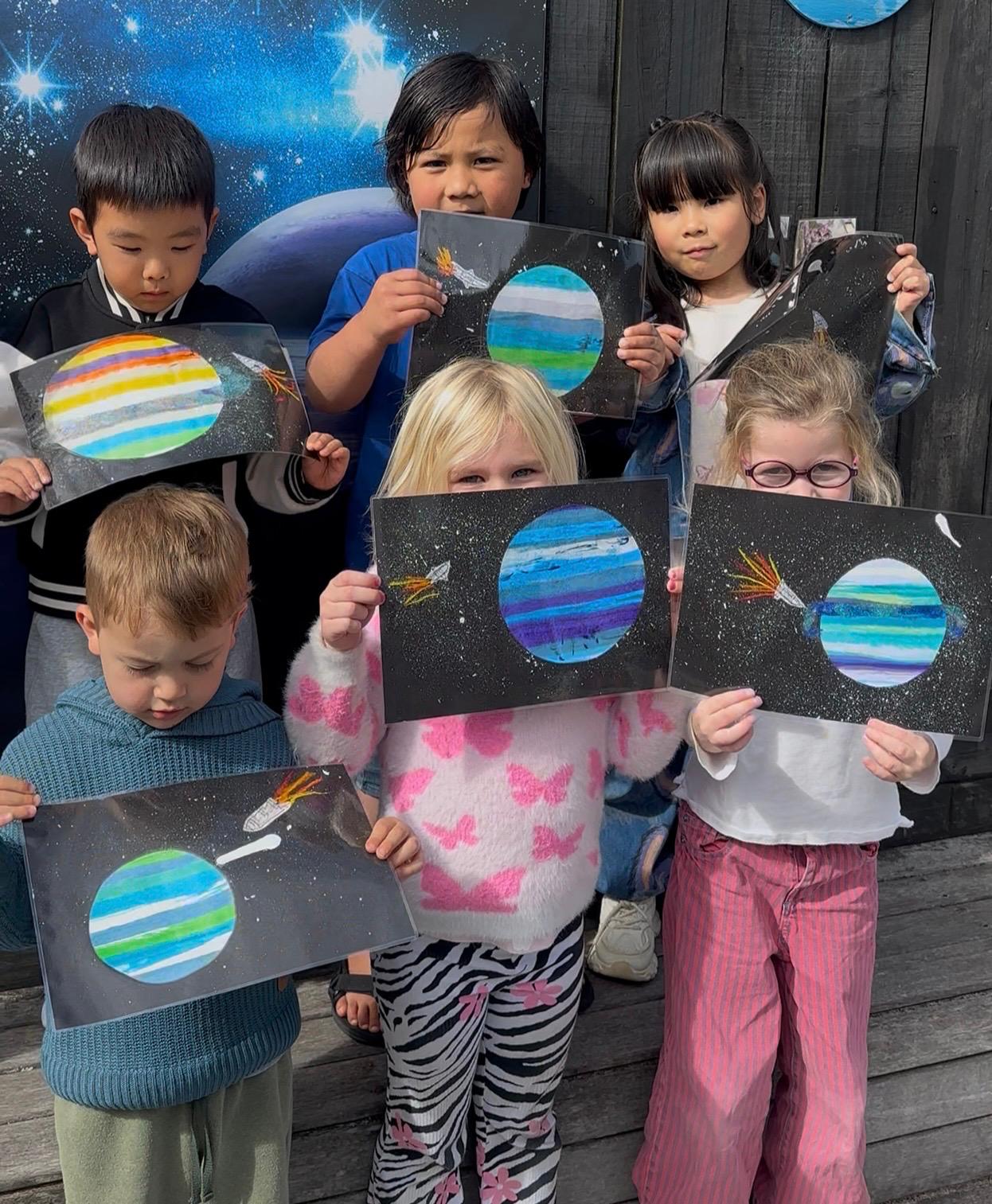
Today you became a real space artist. You worked with such care and excitement as you created your very own planet artwork for our Dream Team display.
You began by making your background. You used a black piece of paper and flicked white paint onto it to make it look like stars. You loved watching the tiny dots appear like a night sky. You took your time and made sure your stars looked scattered, just like real space.
Once your background was finished, it
was time to research your chosen planet. First, you looked up the planets in size order. You studied the pictures and compared how big each planet was. You noticed that Jupiter is the biggest planet and Mercury is the smallest. You used this information to decide just how big your circle needed to be on your page. You showed such clever thinking as you chose the right size circle for your planet.
After you knew the size of your planet, you researched the colours. You looked closely at pictures of your chosen planet and talked about the colours you could see. You noticed
reds, blues, browns, yellows, sparkles, and even shiny metallic tones. You picked out the exact paints you needed, including metallic and sparkly paint to make your planet look just right.
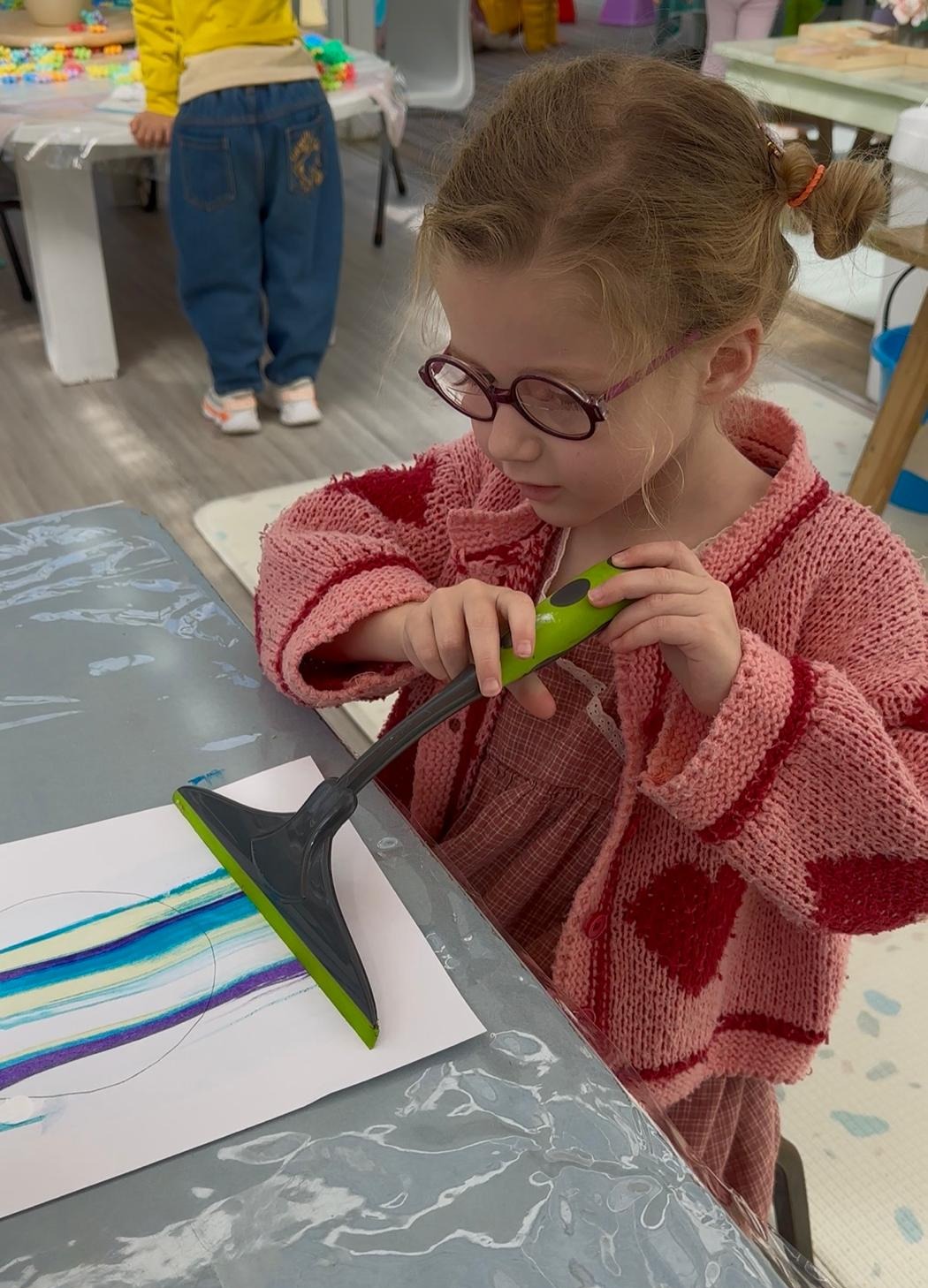
Next, you dotted half your page with the colours you had chosen. You worked slowly and gently, making sure the paint was placed exactly where you wanted it. Then came the exciting part!! You picked up your squeegee and pulled the paint across your circle. The colours blended so beautifully, just like a real planet floating in space. Wow!! Once your planet was dry, it was cut out and
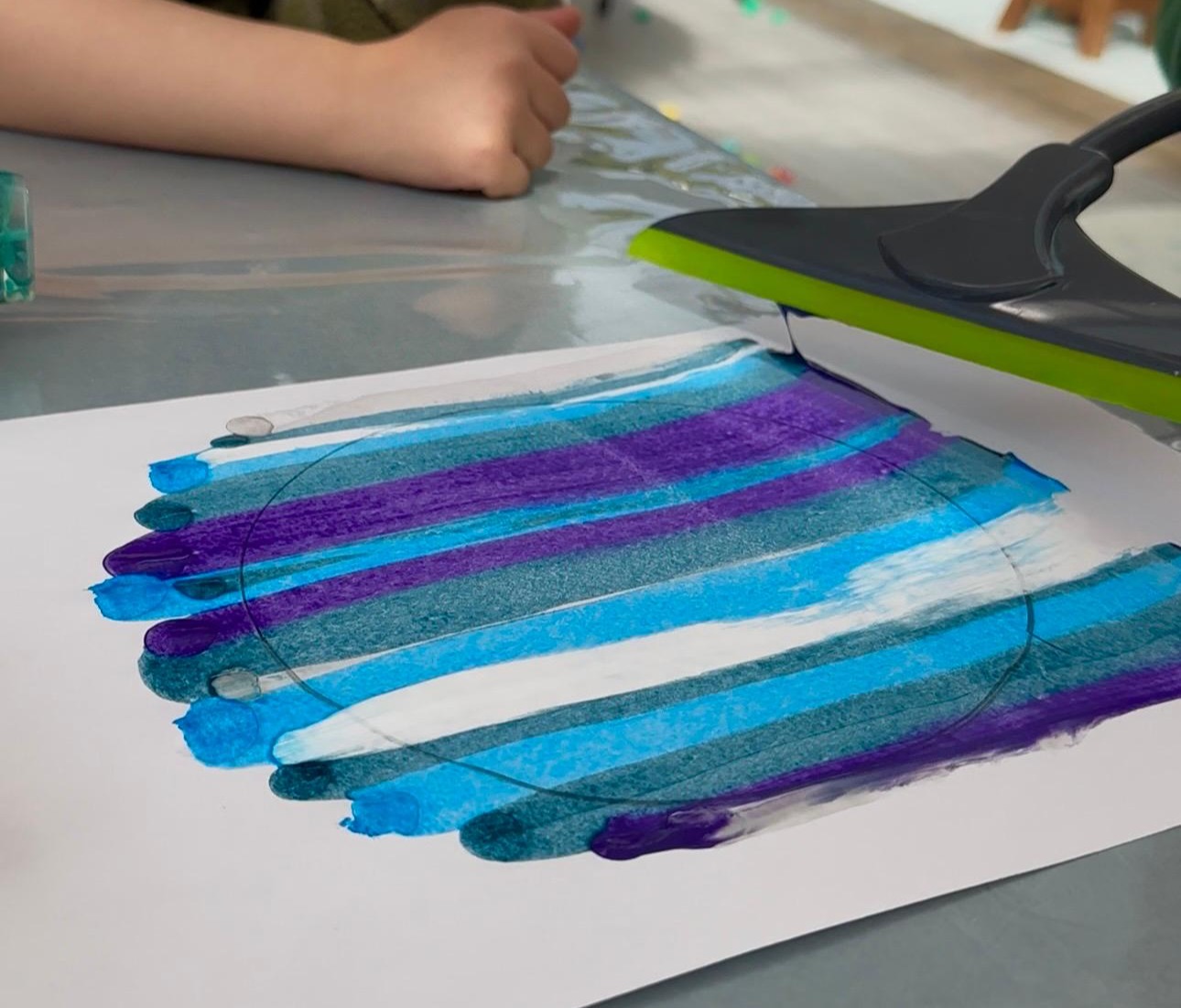
ready for the next step.
You placed your planet onto the starry
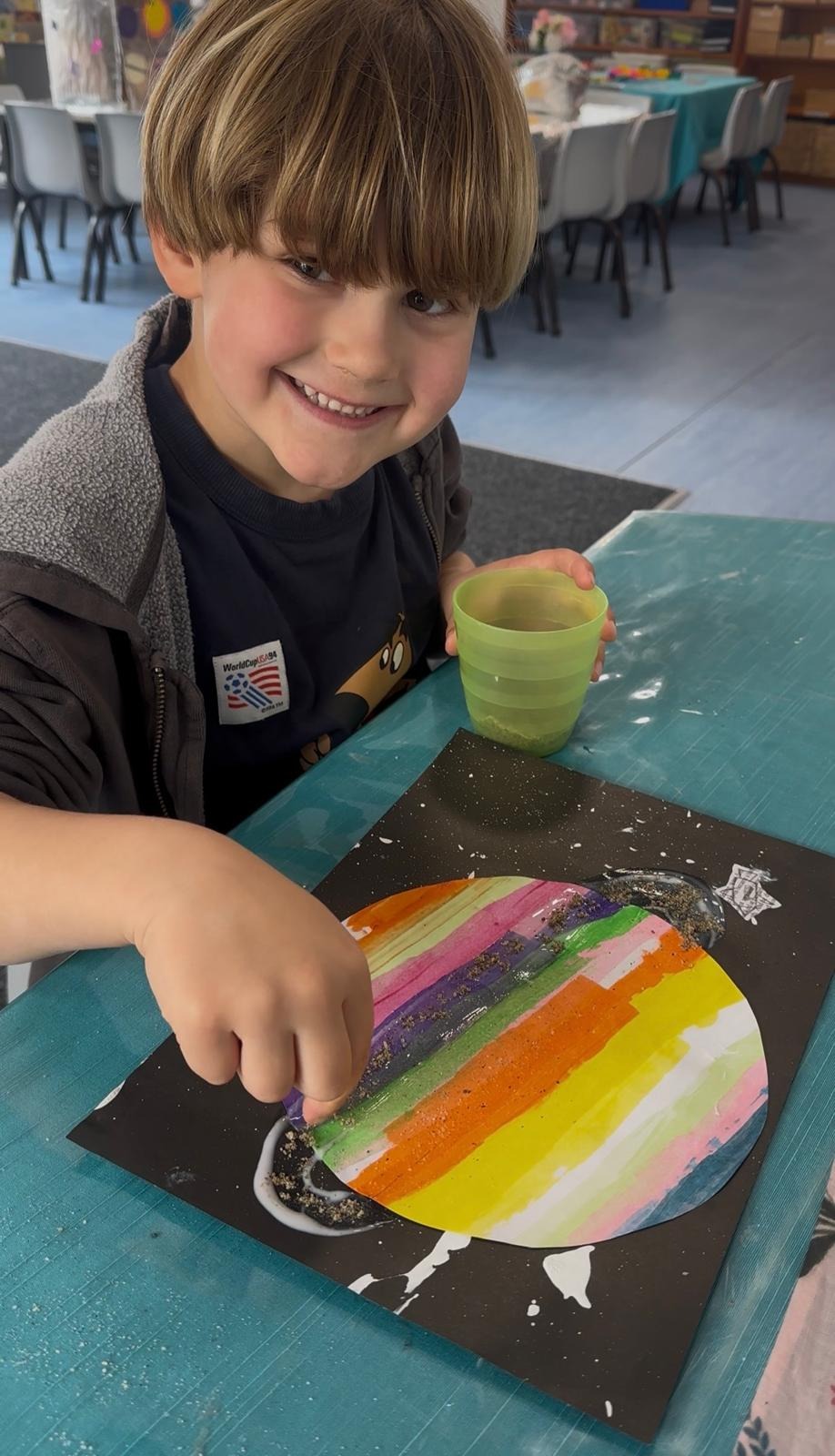
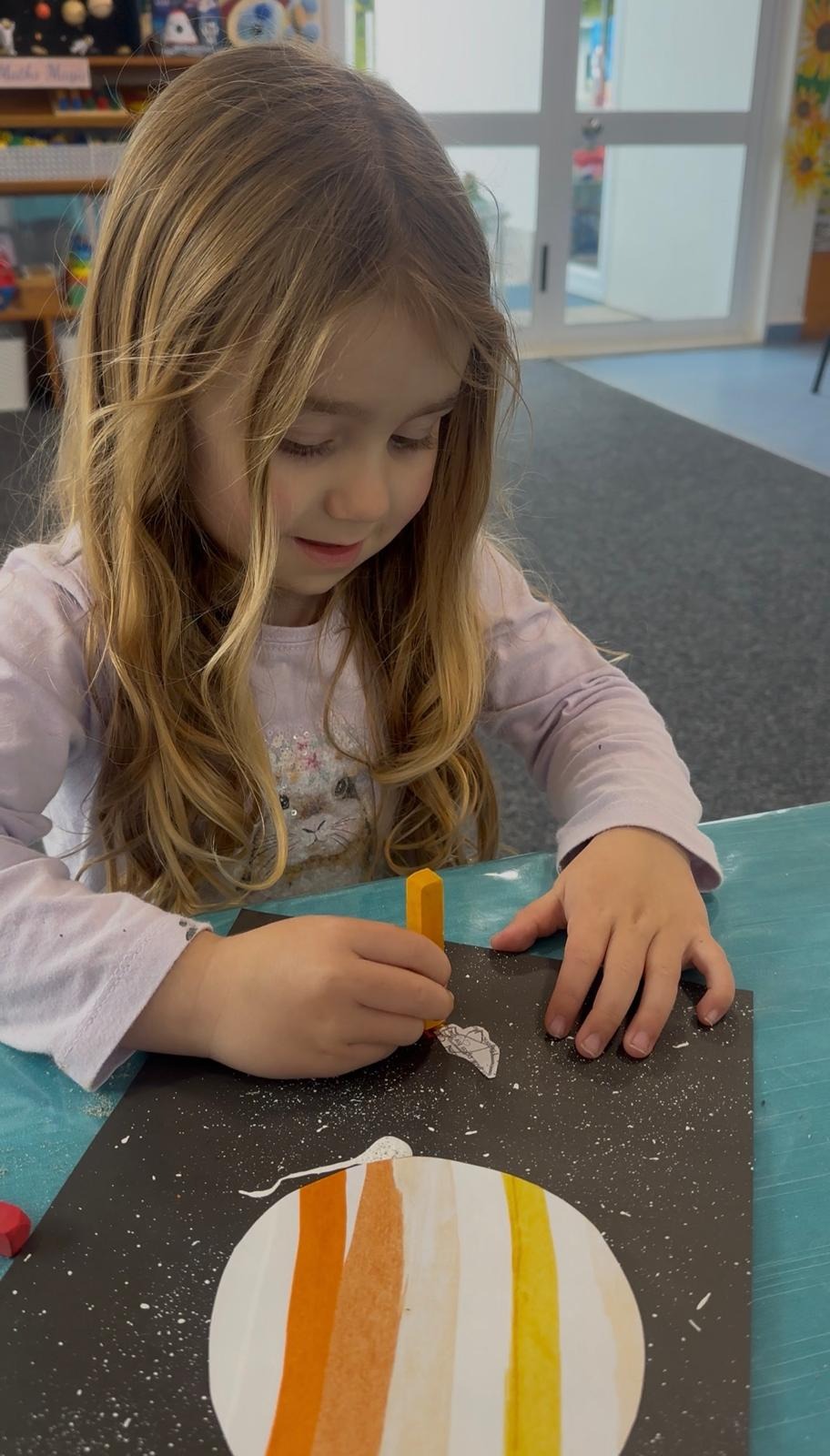
background you had made earlier. Once it was glued down in the perfect spot, you carefully drew your little rocket on some newspaper. You added cool little details that made your rocket look ready for launch! With your knowledge of rocket parts, you made sure it had fins, a nose cone, and the engines. This gave your rocket a really authentic look and showed that you knew exactly how rockets are put together! You glued your rocket onto your picture exactly where you wanted it to fly.
If your planet had rings, you used PVA glue to draw the ring and then sprinkled sand to show the rocks, asteroids, and sparkles to show the ice and
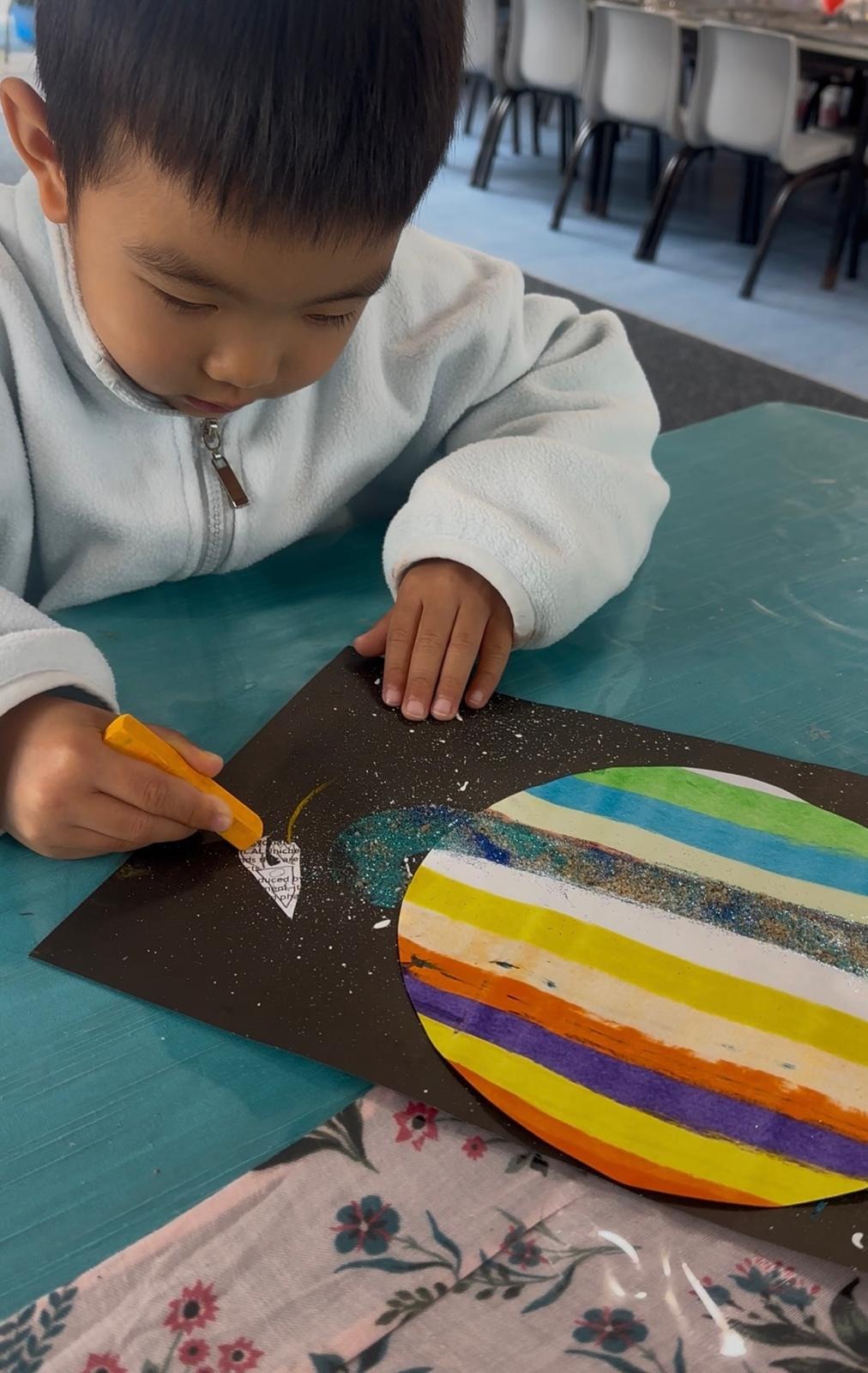
‘diamonds’!
The very last step was the pastel flames. You used red, orange, and yellow pastel to make the vibrant flames shooting out of your rocket. You blended the colours gently and made the flame look warm and bright.
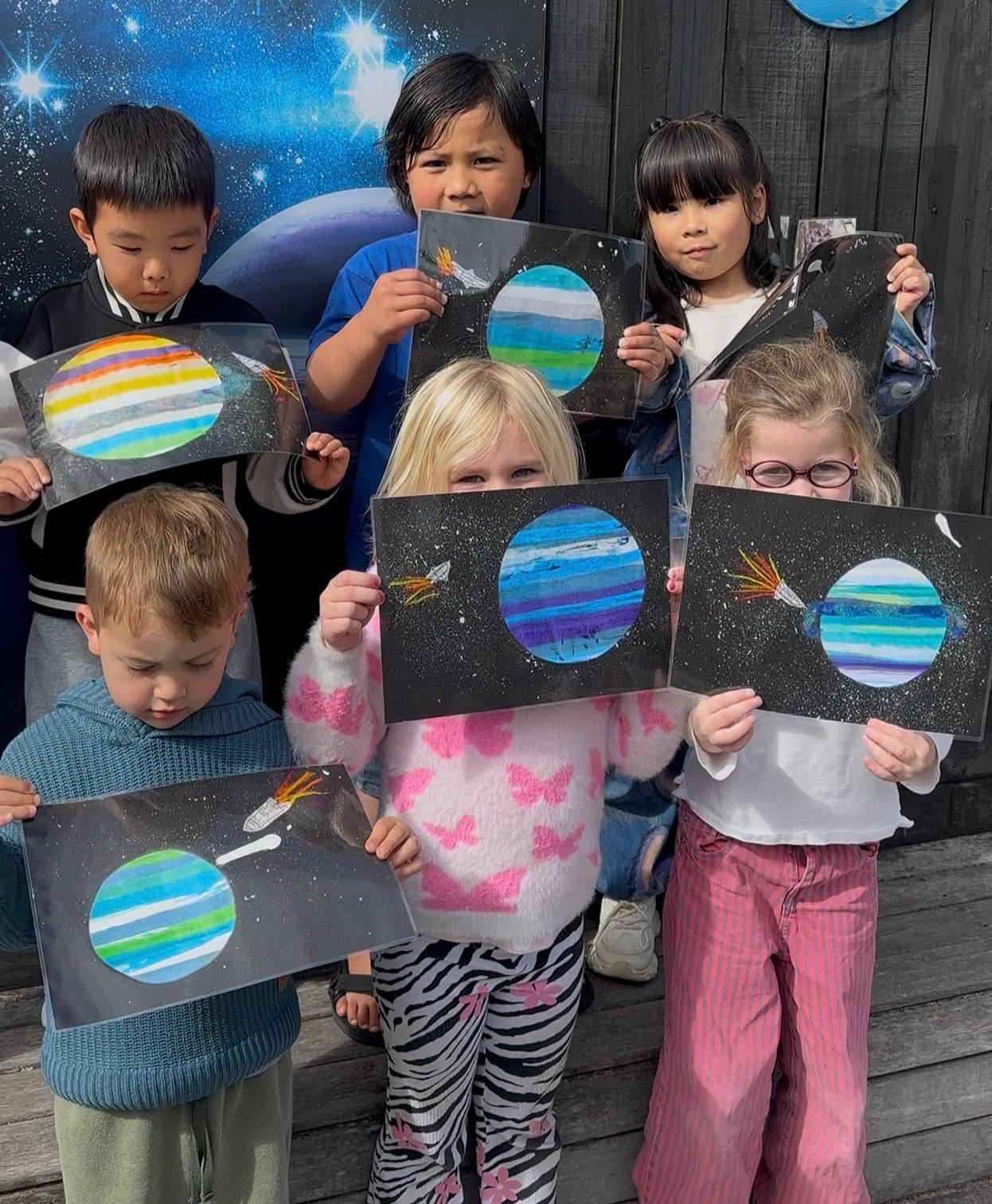
Ka pai, everything was finished; your masterpiece was complete. Your planet looked so colourful and sparkly. Your rocket looked bold and creative. Your stars dotted across the background. We will display your artwork on the little
mat at preschool alongside all the other Dream Team planet art that you have been working hard on. It is very special to have your work displayed. You should feel so very proud of your creativity, your thinking, and your beautiful effort. I cannot wait to see what you create next!
Love Paris xxx
Te Whāriki Links:
Exploration | Mana Aotūroa
- Your curiosity guided your learning today. You explored ideas about space, planets, size, colour, and art. You investigated real pictures of planets and used this information to make decisions about your artwork. You showed confidence in trying new techniques like flicking paint for stars and using a squeegee to spread colour.
Communication | Mana Reo
- You shared your ideas clearly as you talked about planet sizes and colours. You used new vocabulary from our research and expressed your thinking while selecting paint colours, designing your rocket, and explaining where your planet should sit in space. Your artwork became a way for you to communicate your clever understanding of the solar system.
.jpg)
.jpg)