
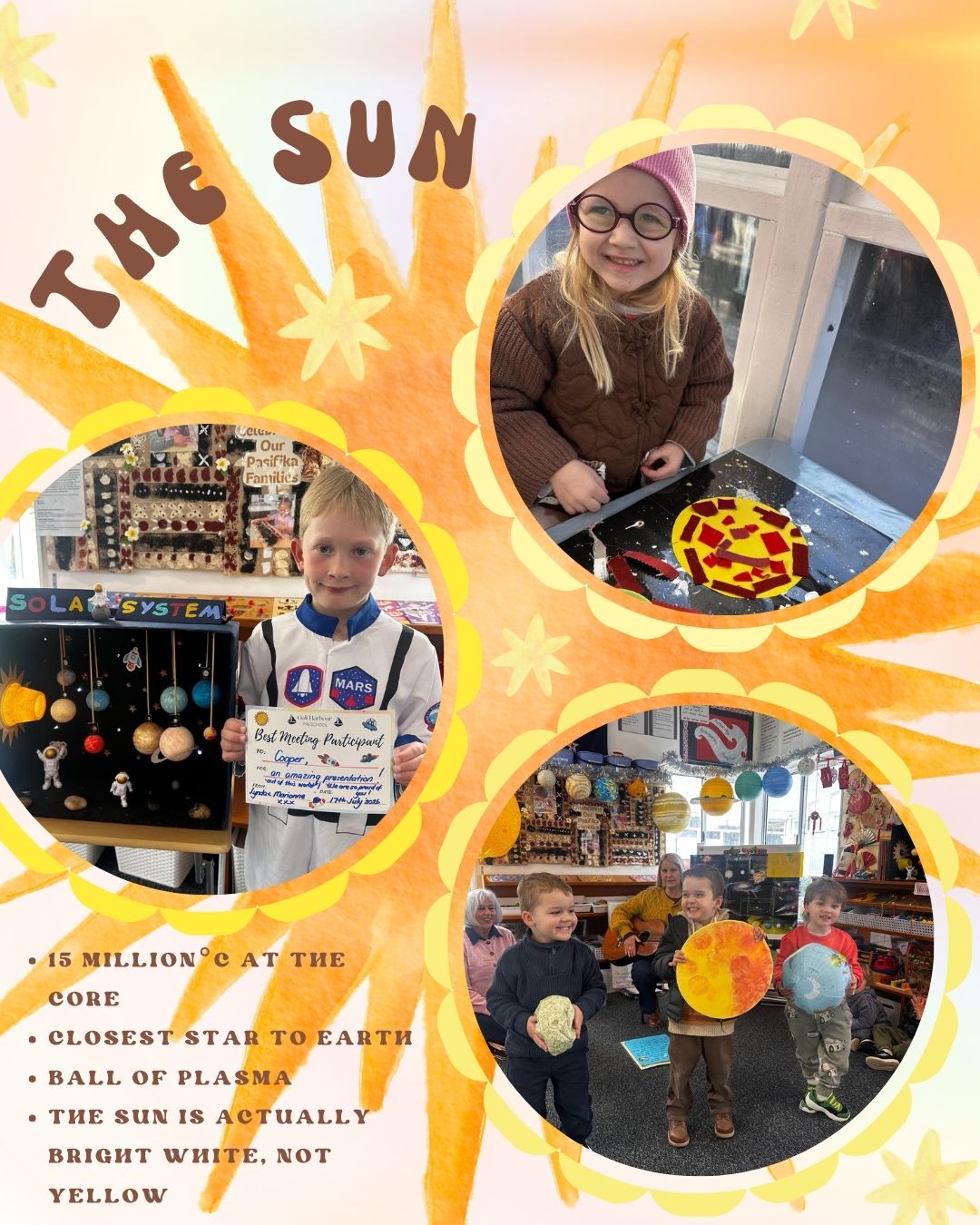

Discovering the Amazing Sun
July 2026
Over the past fortnight, you have been fascinated by learning about our closest star – the Sun! Through discussion, hands-on demonstrations, roleplay and art, you explored some incredible scientific facts and discovered that the Sun is much more than a bright object in the sky.
Together we learned that the Sun is our closest star, and although it feels warm on our skin, its light still takes 8 minutes and 20 seconds to travel all the way to Earth. You were amazed to discover that what we see has actually left the Sun several minutes earlier.
We explored what the Sun is made of and learned that it is made of plasma, a super-hot state of matter. You enjoyed hearing that the Sun isn't solid like a rock but behaves more like a giant wobbling ball of jelly as it spins in space.
One of the highlights of our learning was discovering how the Sun creates its enormous energy. We learned that deep inside the Sun, hydrogen atoms crash together to form helium, releasing an incredible amount of energy. This process creates the heat and light that reaches our planet and can also
produce spectacular solar flares.
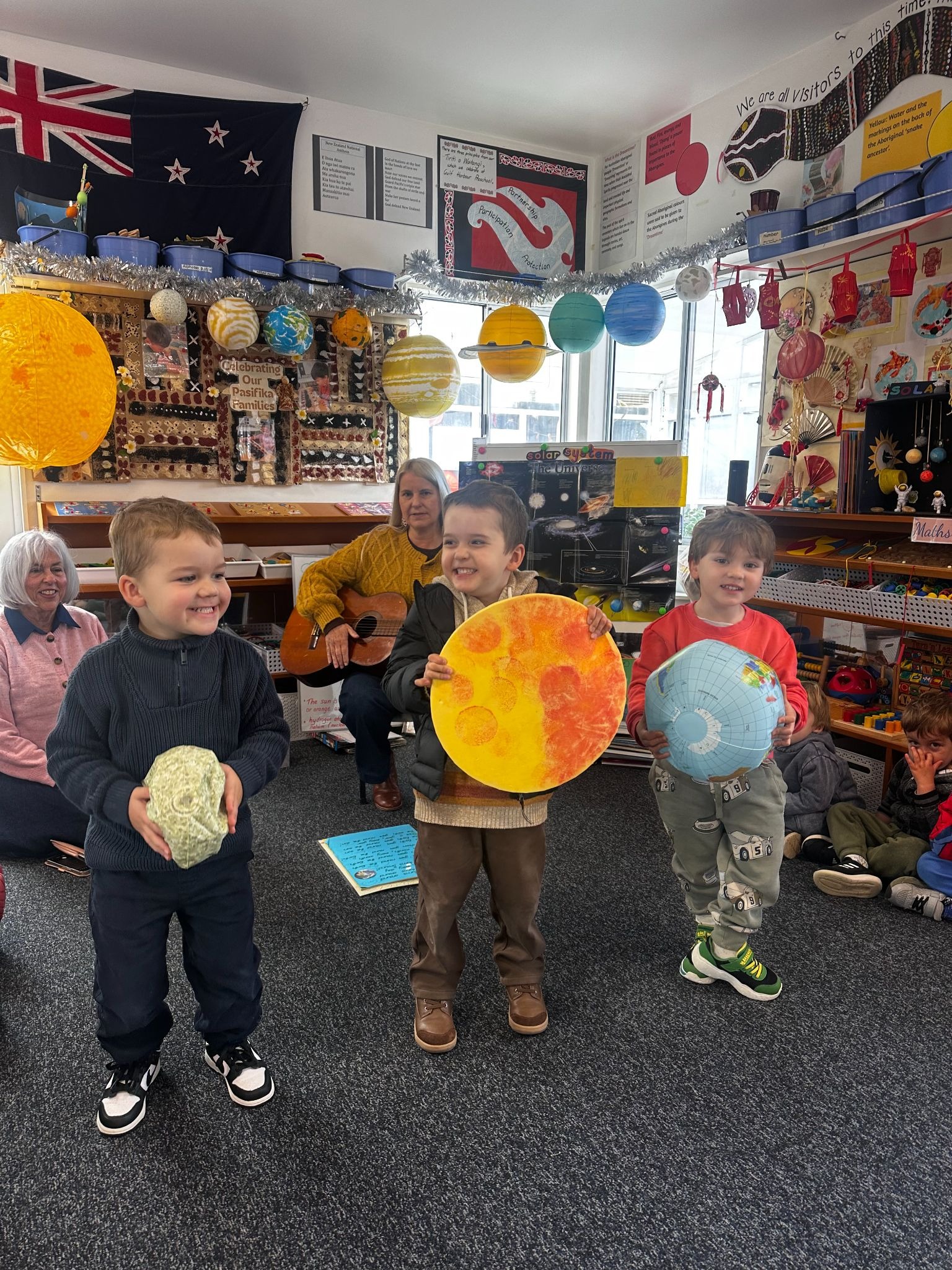
To help bring this concept to life, we became part of the science! You enthusiastically clapped your hands together, representing the hydrogen atoms crashing into one another. With each clap, we imagined the enormous energy being released inside the Sun.
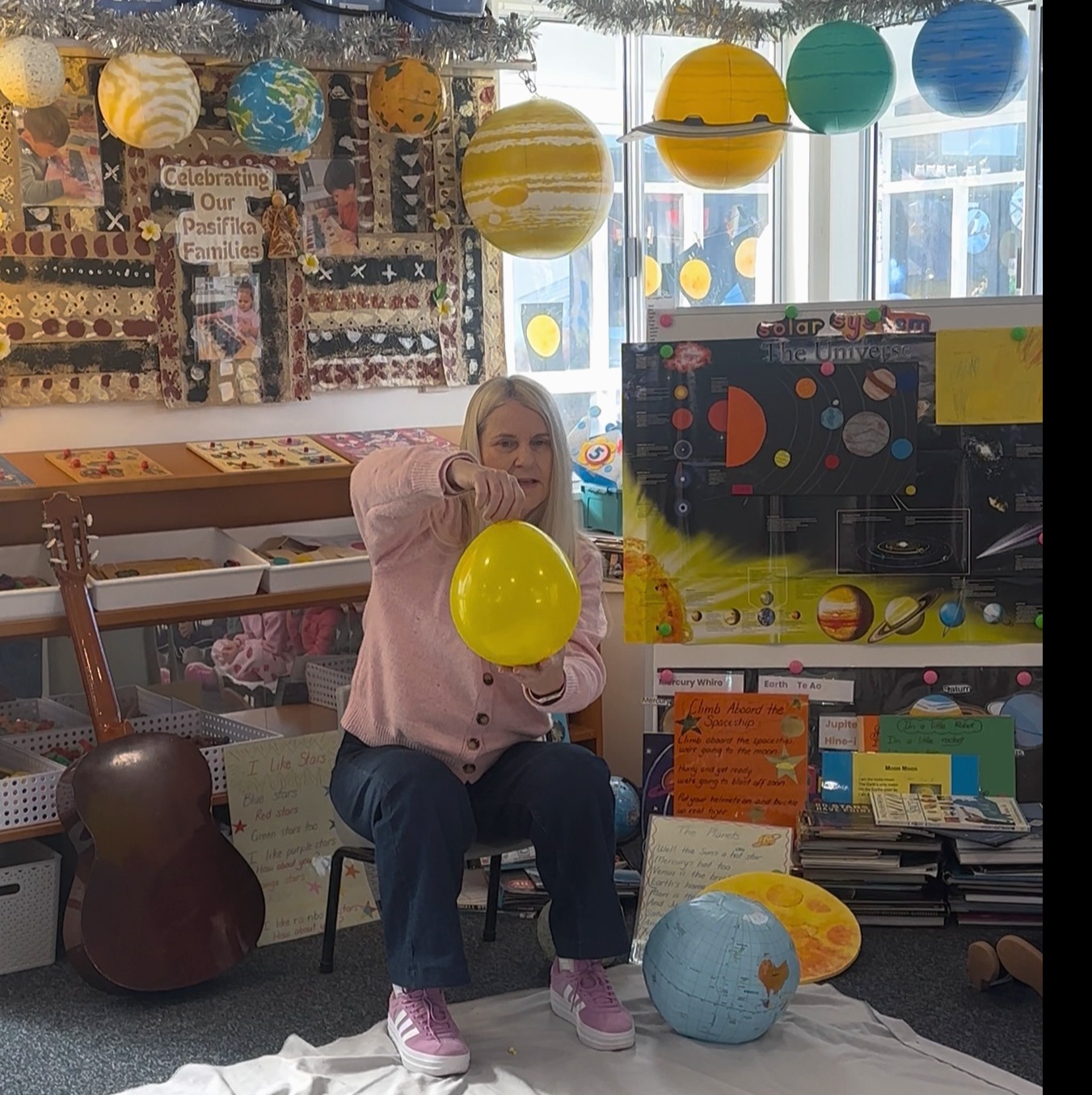
The excitement reached a new level when we watched a dramatic demonstration of a solar flare. A yellow balloon filled with glitter and colourful balls represented the Sun. As everyone eagerly anticipated what might happen, the balloon suddenly burst! Glitter and colourful balls flew everywhere, creating a wonderful surprise that perfectly demonstrated the explosive power of a solar flare. The room filled with laughter, amazement and applause as you experienced science in a memorable and engaging way.
We also discovered some astonishing facts about our amazing star:
- The Sun is actually bright white, although it often appears yellow from Earth because of our atmosphere.
- Its core reaches an incredible temperature of around 15 million degrees Celsius.
- Without the Sun, there would be no light, warmth or life on Earth.
Throughout this investigation, your little ones asked thoughtful questions, listened carefully, shared their ideas and made connections between scientific concepts and the world around them. They demonstrated curiosity, excitement and a genuine sense of wonder as they explored one of the greatest mysteries of our solar system.
Te Whāriki Links
Mana Aotūroa – Exploration: Children developed working theories about the natural world as they investigated the Sun through observation, discussion, movement and scientific demonstrations. They showed curiosity, predicted outcomes and eagerly shared their growing knowledge.
Mana Reo – Communication: Children strengthened their scientific vocabulary by using words such as star, plasma, hydrogen, helium, solar flare, and core. They confidently communicated their ideas, listened to others, and participated in rich conversations.
Mana Tangata – Contribution: Working together, the children collaborated during the demonstrations, celebrated each other's discoveries and confidently contributed their own thoughts and questions.
Our exploration of the Sun sparked awe and excitement, reminding us that children are natural scientists. By combining play, experimentation and meaningful discussion, we created memorable learning experiences that encouraged curiosity about the universe and inspired our tamariki to keep asking, "Why?"
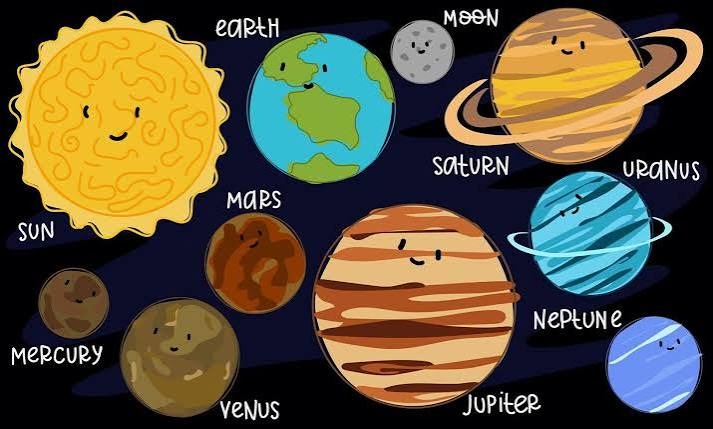
Now we are ready to explore the planets!! Let’s go!!
Marianne x
.jpg)
.jpg)
.jpg)